


Growth hacks
How the Uber Taxi Model Works and What You Can Learn from It
The word "Uber" is now used like a verb in many places. People say, “I’ll just Uber there.” That’s how big of a change Uber brought to the taxi world.

Ebenezer
June 24, 202510 min read
What does scalability actually mean in taxi software?
The hidden cost of choosing a non scalable taxi platform
7 signs your taxi dispatch software has a scalability problem
What a truly scalable taxi management platform looks like
How ZervX is built for scalable taxi operations
Final thoughts
You started your taxi company with a small fleet and a simple setup. Back then, dispatching rides was manageable. Drivers called when they arrived. Bookings stayed low enough for the admin team to handle without stress. Almost any basic system could keep the business running.
Then growth happened faster than expected.
Now your fleet has crossed 40 or 80 vehicles. Airport bookings increase every weekend. A new corporate client wants monthly billing and live trip tracking. Drivers expect instant trip assignments. Passengers want accurate ETAs and smooth app performance every time they book a ride.
Suddenly, the software that once felt “good enough” starts showing cracks.
Trips get delayed during busy hours. Dispatch freezes when too many bookings enter the system at once. Staff return to phone calls, spreadsheets, and WhatsApp messages just to keep operations moving. Drivers become frustrated because ride requests arrive late or disappear completely.
This is the point where many operators realize they do not simply need a better tool. They need scalable taxi dispatch software built for long term growth.
Scalability in taxi management software is no longer something only large ride hailing companies think about. In 2026, even mid sized fleets need systems that can support higher ride volume, more drivers, multiple service zones, and expanding business models without slowing operations down.
That matters even more now because customer expectations are higher than before. Customers expect real time tracking, fast booking confirmation, reliable driver apps, and smooth digital payments as a normal part of modern ride-hailing operations. If the software cannot keep up, the business starts losing trust little by little.
This article explains what scalability really means in a scalable taxi dispatch software platform, why many operators struggle after rapid growth, the warning signs to watch for, and what to look for before choosing a system for long term expansion.
If you are planning to grow your taxi company next year instead of staying the same size forever, this guide will help you avoid expensive mistakes later.
Scalability in taxi management software means the platform can handle more drivers, more bookings, more vehicles, more service areas, and more daily operations without slowing down, crashing, or forcing the business to switch systems. A scalable system grows along with the company and continues to perform smoothly even when demand increases quickly.
A lot of operators misunderstand scalability. Many think it only means “the server can handle more users.” That is only one small part of the story.
Real taxi dispatch system scalability affects almost every part of the business.
Some systems work fine for small fleets but struggle badly during growth. They become slower during peak hours. Reports take forever to load. Admin teams depend on manual work because the software cannot automate larger operations properly anymore.
A scalable platform avoids these problems before they start.
There are two main ways taxi businesses usually grow.
The first is vertical growth.
This means the company becomes bigger inside the same city or service area. More drivers join the platform. Ride requests increase. Peak hour traffic becomes heavier. Dispatch activity grows every day. The software must process larger trip volumes without affecting app speed or ride assignment accuracy.
The second is horizontal growth.
This happens when the business expands into new markets or adds new services. A taxi operator may move into another city, launch corporate transport, add airport transfers, or begin medical transportation services. The platform must support all these operations from one central dashboard instead of forcing the company to manage separate systems.
That is why many operators now prefer cloud-based taxi dispatch software instead of traditional local server setups. Cloud systems usually handle expansion more smoothly because resources can grow along with demand.
A good platform should not only support where your taxi business is today. It should support where the business could be three or five years from now without creating operational chaos later.
Many taxi operators do not notice software limitations in the beginning.
A company grows from 20 vehicles to 100. Bookings increase every month. More drivers join. New service zones open. Suddenly the same software that once looked reliable starts slowing the entire business down.
That is where operators begin paying the hidden cost of choosing a non scalable system.
Growth sounds exciting until the software cannot handle it properly anymore.
One common problem is dispatch lag.
During peak hours, ride requests enter the system faster than the platform can process them. Drivers receive delayed notifications. Some trips get assigned twice. Others disappear completely for a few seconds before reappearing. Passengers notice these problems almost immediately.
A late driver may sound like a small issue once or twice. But when it happens every busy evening, customer trust starts falling quietly.
Many operators then create manual workarounds just to survive daily operations.
The dispatch team starts using phone calls again. Drivers message through WhatsApp because the app feels unreliable. Admin staff track payments manually using spreadsheets because reporting takes too long.
The business keeps running, but now the team spends more time fixing problems than growing the company.
Driver frustration becomes another major issue.
Drivers depend on steady trip flow to earn money. If the app freezes, misses ride requests, or sends delayed notifications, they become irritated quickly. Some stop using the platform during busy periods. Others move to competing companies that offer smoother systems.
Passengers react the same way.
Nobody likes waiting for a driver that never arrives because the dispatch failed in the background. Customers may forgive one bad ride. They rarely forgive repeated problems.
The admin side becomes messy too.
Support tickets increase. Billing errors become common. Corporate clients ask for reports that take hours to prepare manually. Managers spend evenings checking operational mistakes instead of focusing on expansion.
The table below shows how growth affects weak systems compared to scalable taxi dispatch software.
| Situation | Non scalable system | Scalable system |
|---|---|---|
| Peak hour booking surge | Delays, crashes, missed trips | Stable dispatch and fast processing |
| Adding 50 new drivers | Manual setup for each account | Bulk onboarding and faster role management |
| New city expansion | Separate setup and operational confusion | Centralized multi city control |
| Corporate client billing | Spreadsheet based invoicing | Automated billing workflows |
| Large reporting data | Slow exports and incomplete analytics | Real time dashboards across fleets |
Many operators searching for affordable taxi software focus only on monthly pricing. But long term scalability matters much more than short term savings.
Many operators do not realize their platform has scalability issues until the business starts losing money, drivers, or customers.
The warning signs usually appear slowly.
At first, the software only feels slightly slower during busy hours. A few reports fail to load properly. Drivers complain occasionally. Then one day the system becomes the biggest obstacle inside the business.
If your company is growing, these signs should never be ignored.
This is one of the clearest warning signs.
A non scalable platform may work fine during normal traffic but struggle badly during surge periods. Dispatch delays increase when too many ride requests enter the system together.
Drivers receive trip notifications late. Passengers wait longer for confirmations. Some bookings may even disappear temporarily.
Modern taxi dispatch system scalability should allow the platform to handle heavy demand without affecting ride assignment speed.
Some systems still require staff to manually create driver accounts one by one, assign permissions individually, and configure profiles separately for every new onboarding. That becomes a major problem when a fleet expands quickly
A taxi management software for growing fleet operations should support bulk onboarding, automated verification workflows, and centralized driver management from one dashboard. If your team needs several days just to onboard new drivers, the software is already slowing growth.
You can also notice this problem inside the driver app for taxi business workflow when login delays, trip sync issues, or notification failures increase during busy periods.
Many older systems struggle with taxi software multi city operations because they were originally built for single location fleets only.
As soon as new zones open, dispatch settings become messy. Pricing rules overlap. Driver groups get mixed together. Reporting becomes difficult because each city operates separately.
A scalable platform should allow operators to manage multiple regions from one central admin panel while still keeping city specific settings independent.
A growing taxi business rarely operates with one simple pricing structure forever.
Airport rides may need fixed pricing. Corporate clients may use monthly invoicing. Premium vehicles may require different fare logic compared to regular taxis.
Weak systems often fail here.
The platform becomes difficult to configure once pricing models become more advanced. Admin teams return to manual adjustments because the software cannot support operational flexibility.
Scalable taxi dispatch software should support custom fare structures, service zones, vehicle categories, and business models without requiring constant technical intervention.
A small company may only track daily bookings. Larger fleets need revenue reports, zone analysis, driver performance metrics, cancellation tracking, and operational insights across multiple services.
Some systems completely break under large reporting loads. Exports take forever. Dashboards stop updating in real time. Managers cannot access accurate operational data when they actually need it.
That creates poor decision making because the business starts operating blindly.
Reliable analytics are now a major part of modern fleet management software platforms, especially for operators handling large ride volumes daily.
The apps are the face of the business. Passengers may never see the backend system, but they immediately notice when bookings fail, tracking freezes, or app performance becomes unreliable.
Drivers notice even faster. Missed notifications, delayed trip updates, GPS sync failures, and crashing apps create frustration almost instantly. Drivers lose confidence in the platform because their earnings depend on reliable operations.
A scalable backend infrastructure should support thousands of active users at the same time without affecting app performance.
This matters heavily in taxi business software 2026 because customer patience is much lower than before.
This sign often gets ignored because businesses slowly adapt to bad systems over time.
The dispatch team starts using WhatsApp for driver communication.
Finance teams export trip data into Excel because billing automation does not work properly.
Managers rely on phone calls to coordinate bookings during busy hours because dispatch visibility becomes unreliable.
At that point, the software is no longer supporting the business properly. The staff is carrying the operational load manually
A scalable system should reduce operational complexity as the business grows, not increase it.
If your company keeps adding manual processes every time growth happens, the platform is probably reaching its limit already
A lot of software companies claim their platform is scalable.
In reality, many systems only support small fleet growth before problems begin showing up. The real test happens when ride demand increases suddenly, multiple cities are added, or new business models enter the operation.
A truly scalable platform should continue running smoothly even when the business becomes far more complex than it was on day one.
Many operators hear the phrase “cloud based taxi dispatch software” and assume every platform works the same way.
That is not true.
Some older systems were originally built for local servers and later moved onto cloud hosting. Those platforms often struggle when demand spikes because the software itself was never designed for large scale operations.
Cloud native systems work differently.
They are built from the beginning to support high ride volume, large driver networks, and heavy concurrent activity. The infrastructure expands automatically when booking demand rises instead of requiring manual server upgrades. That matters during busy hours.
If a major airport event, holiday rush, or corporate booking spike suddenly doubles ride requests, the platform should scale resources automatically without slowing dispatch performance.
Reliability matters just as much as speed.
Modern taxi businesses operate around the clock. Drivers may work overnight. Airport transfers happen early morning. Corporate transport runs on fixed schedules. Downtime creates immediate financial loss.
That is why scalable platforms focus heavily on uptime stability and faster recovery systems.
A taxi company may begin with regular city rides and later expand into airport transfers, executive transport, shuttle services, or medical transportation. This is where many systems fail badly.
The software becomes difficult to manage once multiple pricing models, vehicle categories, and dispatch zones enter the picture.
A scalable platform should support taxi software multi city operations from one centralized dashboard.
Operators should be able to configure separate pricing structures for different cities, assign driver pools by region, manage various vehicle categories, and monitor performance across the entire business without switching between disconnected systems.
This becomes especially important for operators handling corporate travel, airport services, or larger contract based operations.
Businesses searching for better corporate transportation software or advanced airport shuttle software often face these scalability challenges first because operational complexity increases very quickly in those sectors.
A scalable system should simplify expansion instead of creating more administrative confusion.
Basic dispatch systems only focus on assigning the nearest available driver. That may work for small fleets. It becomes inefficient at larger scale. Modern scalable taxi dispatch software needs smarter dispatch logic.
The system should consider vehicle category, traffic conditions, driver availability, service zones, ride priority, customer preferences, and scheduled bookings at the same time.
This becomes critical once hundreds of active trips run together across multiple areas.
Good dispatch systems reduce idle time, improve trip distribution, and help operators maintain better service quality during heavy demand periods.
Features like zone based dispatching, AI assisted ride matching, scheduled ride management, and dynamic pricing help larger fleets stay organized even during sudden booking spikes.
Operators usually start noticing these advantages once their daily operations become too large for manual supervision alone.
Growth places pressure on apps first. Passengers expect booking confirmation instantly. Drivers expect accurate navigation, trip updates, and fast ride notifications without delays.
If the apps become unstable during high traffic periods, frustration spreads quickly across both sides of the platform.
That is why scalability must include frontend performance too, not only backend infrastructure. A scalable system should maintain fast app speed even when thousands of users stay active at the same time.
Booking requests, live tracking, digital payments, and notifications should continue working smoothly during busy periods.
Strong app performance also reduces support pressure because fewer technical complaints reach the admin team.
Brand identity becomes more important as businesses grow.
Many operators want their own branded passenger app, driver app, and booking experience instead of promoting another company’s identity.
A scalable white label platform should allow operators to expand into new markets while maintaining the same brand experience across every city and service type.
That includes custom branding inside apps, business specific booking flows, localized pricing structures, and independent operational control without losing scalability.
As the fleet grows, the business should still feel like one connected brand to drivers and passengers.
A good platform overview should clearly show how the system supports both operational growth and long term brand ownership together.
Many taxi platforms work well in the early stages of a business. Problems usually start when the fleet grows faster than expected.
ZervX was built to handle that growth from the beginning.
The platform runs on a secure cloud native infrastructure designed for both small and large fleet operations. Whether a company manages 20 drivers or 500 plus vehicles, the platform continues to support dispatch, booking management, and real time operations without forcing operators to migrate to another system later.
That matters because scalability should feel smooth, not stressful.
Operators using taxi dispatch software need to focus on growing the business instead of worrying about server limits, software slowdowns, or operational bottlenecks every few months.
ZervX also supports multiple transport services from one centralized dashboard. Businesses can manage ride hailing, airport transfers, executive transportation, employee transport, and medical transportation together without running separate systems for each service type.
As companies expand into new cities or launch new services, the platform allows operators to manage pricing rules, dispatch zones, driver groups, and vehicle categories centrally while still keeping operations organized.
The platform also gives fleet managers real time visibility into bookings, driver activity, earnings, and dispatch performance. Fast access to accurate operational data becomes extremely important as ride volume increases.
Another important part of scalability is branding.
ZervX supports white label operations, allowing businesses to maintain their own brand identity across passenger apps, driver apps, and admin systems as the fleet expands into new markets.
Operators comparing platforms often focus only on short term features. But long term growth support becomes much more important later when the business scales rapidly.
That is why many companies review real case studies and compare platforms carefully before making a software decision.
A scalable platform should not only support where a taxi business is today. It should support where the business plans to be years from now.
Final Thoughts
Scalability is not just another software feature anymore. For taxi businesses in 2026, it has become a major part of long term survival and growth.
A platform that works for 10 drivers today may completely struggle once the fleet reaches 100 vehicles, expands into multiple cities, or starts handling larger booking volumes every day. That is why choosing the right system early matters so much.
The cost of using non scalable software usually appears later through dispatch delays, operational confusion, driver frustration, poor customer experience, and expensive platform migration projects.
On the other hand, scalable taxi dispatch software helps businesses grow with confidence. It keeps operations organized, supports larger fleets smoothly, and gives operators the flexibility to expand without rebuilding workflows every few years.
That is exactly what modern taxi businesses need now.
ZervX is built for operators who are planning for the future instead of only solving today’s problems. From growing local fleets to large multi city transport operations, the platform is designed to support long term expansion without slowing the business down.
If you are planning to scale your operations, this is the right time to evaluate whether your current system can truly grow along with your business.
Explore the platform overview , compare platforms , or start your free trial to see how ZervX supports scalable taxi operations in 2026.
Article by
Ebenezer is a transportation technology expert with over 10 years of experience in the taxi and on-demand mobility industry. He has helped taxi companies improve operations with modern dispatch software. His advice, based on practical experience and thorough research, makes him a trusted guide for taxi owners in choosing the right software and managing operations.

What does scalability actually mean in taxi software?
The hidden cost of choosing a non scalable taxi platform
7 signs your taxi dispatch software has a scalability problem
What a truly scalable taxi management platform looks like
How ZervX is built for scalable taxi operations
Final thoughts
Blog

The word "Uber" is now used like a verb in many places. People say, “I’ll just Uber there.” That’s how big of a change Uber brought to the taxi world.
Ebenezer
June 24, 2025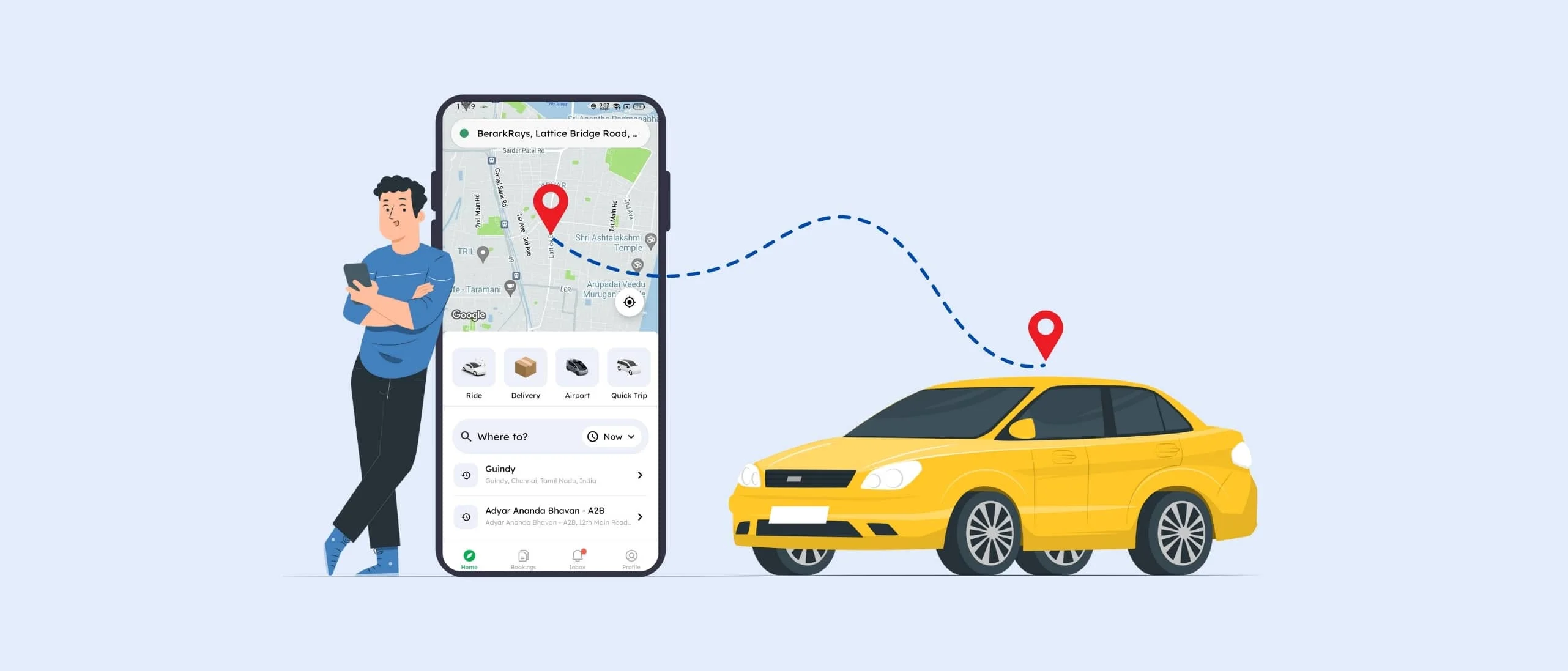
The ride hailing has become an innovation of transport, disrupting the transport sector and in particular the taxi business in urban regions.

John Sibin Raj
June 15, 2024
Your taxi business can’t afford to fall behind. Let’s be real 2026 is here and if your taxi company still relies on phone calls, paper schedules, or basic GPS tools, you’re already losing customers fast.
John Sibin Raj
Jan 31, 2025