






Growth hacks
Taxi Apps in Saudi Arabia | A Guide for Taxi Business Owners
Taxi apps are changing the way people get around in Saudi Arabia. Today, more riders use their phones to book taxis instead of calling a dispatcher.

Ebenezer
Mar 20, 202510 min read
Top taxi apps every Australian should know
The technology behind taxi apps
Taxi app market in Australia overview
How local taxi businesses can compete in the Australian app market
How ZervX can help local taxi businesses in Australia
Final thoughts
Over 15 million Australians now use ride-hailing services every year. What started as a convenience in big cities has quickly grown into a normal way of getting around, whether for a quick trip to the office, a night out, or an airport transfer. Today, apps have changed how people book taxis.
Global players like Uber, DiDi, and Ola lead the space, but local Australian apps like 13Cabs, Rydo, and Shebah are also popular. Each platform brings its own pricing, features, and coverage areas. For passengers, this variety means more choice. For local taxi businesses, it means more competition.
This article provides a clear view of the current market. You will discover which taxi apps are most used in Australia, how the technology behind these apps works, and what it takes for local operators to launch their own digital solution. The goal is simple — show passengers the best options and help taxi business owners understand how they can compete on a fair level with bigger brands.
It covers both perspectives. Passengers will learn which taxi apps are worth trying, while taxi businesses will see how they can launch their own app, streamline operations, and grow bookings. By the end, you will understand the Australian taxi app market and the steps needed to succeed, whether you are riding or driving the change.
Most Australians now prefer booking through an app instead of calling a company or hailing a cab on the street. Apps make it simple to track rides, pay cashlessly, and get an estimated fare instantly.
For business owners, knowing which apps are popular helps understand customer expectations. Local taxi companies can learn what features riders value and how to compete in a tech-driven market.
Here are the top taxi apps passengers use across the country:
Uber is the most widely used ride-hailing app in Australia. It operates in almost every major city, including Sydney, Melbourne, Brisbane, and Perth. Uber’s appeal lies in its fast booking system, transparent fare estimates, and variety of ride options, such as UberX for regular trips, UberXL for larger groups, and Uber Green for eco-friendly rides.
Passengers appreciate features like live driver tracking, upfront pricing, and in-app support. For business owners, Uber shows how technology and reliability can increase rider loyalty. Local taxi companies can learn from Uber’s convenience-focused approach to offer a seamless passenger experience.
DiDi has become a strong competitor in Australia, especially in urban areas. It is known for competitive pricing and frequent promotions, making it ideal for daily commuters. Safety features like real-time ride tracking, SOS alerts, and driver verification help passengers feel secure during trips.
13Cabs is a long-established Australian brand that has successfully transitioned to digital. Its app allows passengers to pre-book rides, track drivers in real-time, and pay via cash, card, or wallet. The app also provides booking history and loyalty rewards for frequent users. For passengers who prefer a traditional taxi experience with digital convenience, 13Cabs is a go-to choice.
Rydo is a growing taxi app that connects passengers to a network of licensed taxis across Australia. It focuses on high service standards, driver professionalism, and quick booking options. Rydo also offers loyalty programs and regular discounts, helping frequent riders save money while encouraging repeat usage. The app is popular in cities like Sydney and Melbourne and offers loyalty programs for frequent riders.
Shebah is a women-focused taxi service available in select Australian cities. It provides rides driven exclusively by female drivers, catering to passengers who prioritize comfort and safety. The app allows pre-booking, flexible payment options, and driver ratings for added security.
For business owners, Shebah is an example of a niche approach. Creating a specialized service within a taxi app can attract a dedicated audience and differentiate a local company from larger competitors.
Passenger expectations have shifted. Convenience, transparency, and safety are now must-have features in every ride. Without a digital solution, local taxi companies risk losing business to well-established apps.
By analyzing popular apps, operators can understand what passengers value most. Features like easy booking, live tracking, secure payments, loyalty programs, and professional drivers are key. Local businesses that offer a similar experience through their own branded app can compete effectively and retain loyal customers.
Taxi apps might look simple to passengers, but a lot happens behind the scenes to make rides smooth, safe, and fast. Understanding how these apps work helps both passengers appreciate the convenience and business owners see what features they need to compete.
At the core, every taxi app has several key components:
This is where riders book trips. Users can enter their destination, see the estimated fare, track the driver in real-time, and pay through multiple options like credit cards, digital wallets, or cash. Notifications keep passengers updated about driver arrival, route changes, and payment confirmation.
Drivers receive booking requests through their app. The app shows passenger details, pick-up location, and navigation guidance. Drivers can accept or reject rides, manage schedules, and receive earnings summaries. Safety features like SOS buttons or ride-sharing alerts are also included.
This is the control center for the taxi business. Fleet managers can monitor rides, track drivers, manage payments, handle customer queries, and generate reports. The admin panel ensures the business runs smoothly and decisions are based on accurate data.
GPS enables real-time tracking of drivers and passengers. Smart dispatch systems match riders to the nearest available driver, reducing waiting time and optimizing routes. This system is essential for large cities where efficiency can impact customer satisfaction.
Apps integrate with secure payment gateways to allow cashless transactions. This ensures safety, transparency, and convenience for both passengers and drivers.
Australian taxi apps often include features like ride-sharing alerts, driver verification, SOS buttons, and trip history. These features increase passenger trust and driver accountability.
Passengers and drivers can rate each other after each trip. This feedback loop helps maintain service quality and improves the overall experience for everyone.
These features are not exclusive to billion-dollar companies. Local taxi fleets in Australia can now access the same technology stack with taxi dispatch software, providing passengers with the same convenience and safety while keeping costs manageable for the operator.
Also Read: How taxi apps work? All you need to know
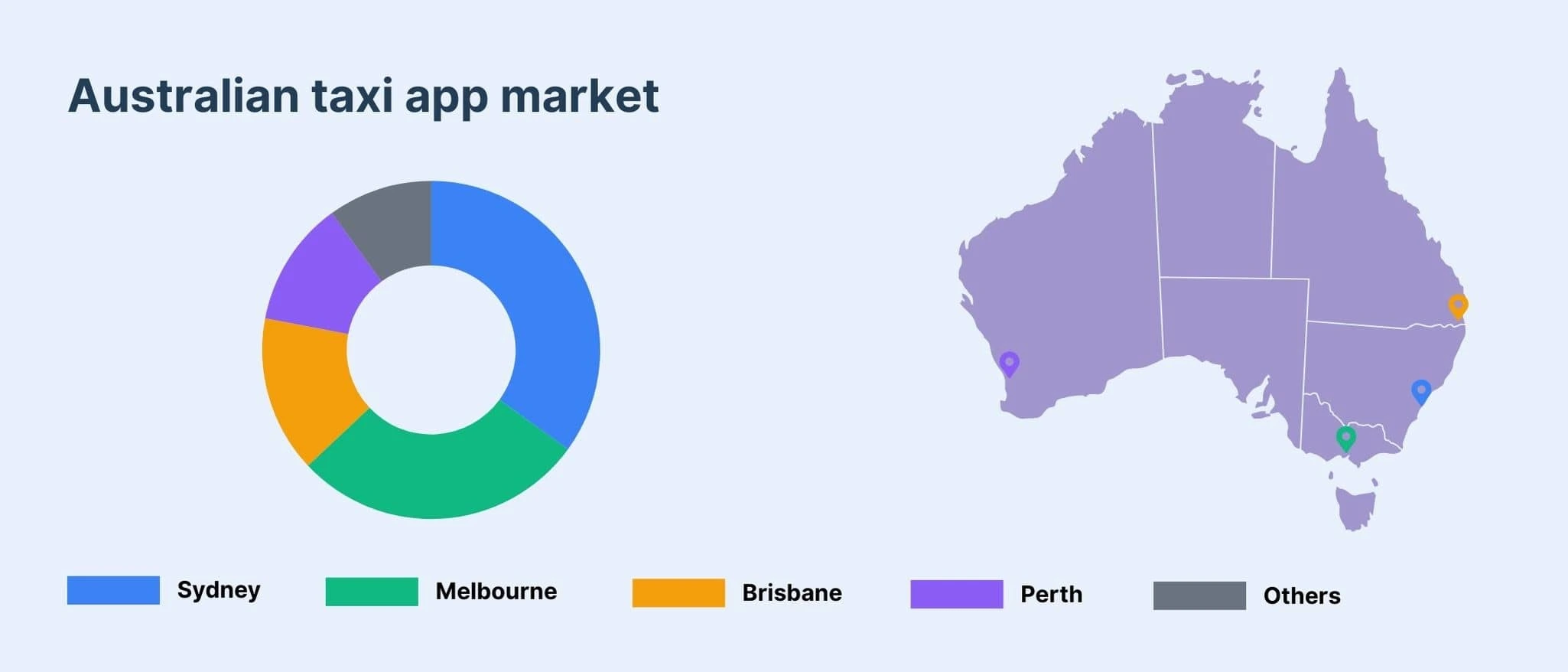
The taxi app market in Australia has grown rapidly over the last decade. With millions of passengers relying on digital bookings, both global and local operators see strong demand. Understanding the market size, city-level trends, and revenue models helps taxi businesses plan their strategy effectively.
As of 2025, over 15 million Australians use ride-hailing and taxi apps regularly. Major cities like Sydney and Melbourne dominate usage, but regional cities are also seeing increasing adoption. The market continues to expand as more passengers prefer cashless payments, GPS tracking, and quick booking options.
Sydney – Sydney is the largest market. Heavy commuter traffic and tourism make app-based bookings highly popular. Competition is strong between Uber, DiDi, and local apps like 13Cabs.
Melbourne – Melbourne sees high usage of ride-hailing apps during weekdays for work and weekends for leisure. Local operators are adopting digital solutions to remain competitive.
Perth & Brisbane – These cities are seeing steady growth in app-based bookings, especially among younger demographics. Riders value convenience and safety, creating an opportunity for local taxi companies to offer branded apps.
Taxi apps generally operate under two revenue models:
| Model | How It Works | Pros for Operators |
|---|---|---|
| Commission-based | App charges a percentage of each fare | Low upfront cost, scalable |
| Fixed-fee/subscription | Operators pay a monthly or yearly fee for using the platform | Predictable costs, full control of pricing |
Local taxi businesses can choose a model based on fleet size, expected trip volume, and investment capacity.
The Australian taxi market is competitive, but local operators have a real opportunity to compete with global ride-hailing apps. The key is adopting technology that meets passenger expectations while keeping costs and operations manageable.
Street hails and phone bookings are declining. Data shows that in major cities, less than 20% of taxi trips are booked offline. Passengers now prefer apps that allow them to:
Without a digital presence, taxi businesses risk losing regular customers to Uber, DiDi, and other ride-hailing platforms. Going digital allows operators to offer the same convenience while keeping their brand front and center.
Launching a competitive app involves several components:
Passenger app – Enables riders to book trips, track drivers, and pay seamlessly.
Driver app – Allows drivers to receive bookings, navigate efficiently, and manage earnings.
Admin panel – Lets fleet managers oversee rides, track drivers, handle payments, and generate reports.
Compliance checklist – Ensures vehicles and drivers meet local and state regulations.
These components create a complete ecosystem that rivals the features of global apps while remaining fully under local control.
Operators face a choice: build a custom app or buy a ready-made solution.
Investing in a ready-made solution often provides a quicker path to revenue and reduces risks associated with development delays or technical issues.
ZervX is designed for local taxi operators who want to compete with big ride-hailing brands without overspending on technology. Our platform provides all the tools needed to run a modern, digital-first taxi business while keeping your brand at the front.
Your app carries your name, logo, and colors so passengers always see your brand, not ours.
Instead of waiting a year to launch, ZervX sets you up with a complete passenger app, driver app, and admin panel in a matter of weeks.
Whether you run 10 cars or 1,000, the platform grows with your business and adapts to your needs.
GPS tracking, cashless payments, driver management, loyalty programs, and safety features come built-in.
With flexible pricing models, you can keep upfront costs low and focus on building revenue.
Final Thoughts
The way Australians book taxis has changed forever. With more than 15 million people now relying on apps for everyday travel, the demand for fast, safe, and digital-first rides will only continue to grow. Global players like Uber and DiDi may dominate headlines, but local apps such as 13Cabs, Rydo, and Shebah prove that there is space for trusted Australian operators to compete.
For passengers, this competition means better service and more options. For taxi business owners, it is a clear signal staying offline or relying only on phone bookings is no longer enough. Riders expect cashless payments, real-time tracking, and simple booking, and if one company cannot provide it, another will.
The good news is that the technology once reserved for billion-dollar brands is now within reach of local operators. With white-label platforms like ZervX, taxi businesses of any size can launch a fully branded app, streamline operations, and build rider loyalty.
The window of opportunity is open, but it will not stay that way forever. As more fleets in Australia adopt digital solutions, the ones that wait risk losing even more market share. Acting now means keeping your passengers, attracting new ones, and competing on equal terms with the biggest names in the industry.
Article by
Ebenezer is a transportation technology expert with over 10 years of experience in the taxi and on-demand mobility industry. He has helped taxi companies improve operations with modern dispatch software. His advice, based on practical experience and thorough research, makes him a trusted guide for taxi owners in choosing the right software and managing operations.

Top taxi apps every Australian should know
The technology behind taxi apps
Taxi app market in Australia overview
How local taxi businesses can compete in the Australian app market
How ZervX can help local taxi businesses in Australia
Final thoughts
Blog

Taxi apps are changing the way people get around in Saudi Arabia. Today, more riders use their phones to book taxis instead of calling a dispatcher.
Ebenezer
Mar 20, 2025
Life in the 21st century is undeniably busy. In tandem, the ever-evolving digital landscape is catering to these dynamic lifestyles by offering solutions that unite various different services into one single platform. These are famously known as super apps.

John Sibin Raj
Mar 28, 2024
Have you ever sat in traffic and wondered if there could be a faster, cheaper way to get around? In many busy cities, people waste a lot of time stuck in traffic.
Ebenezer
Mar 13, 2025