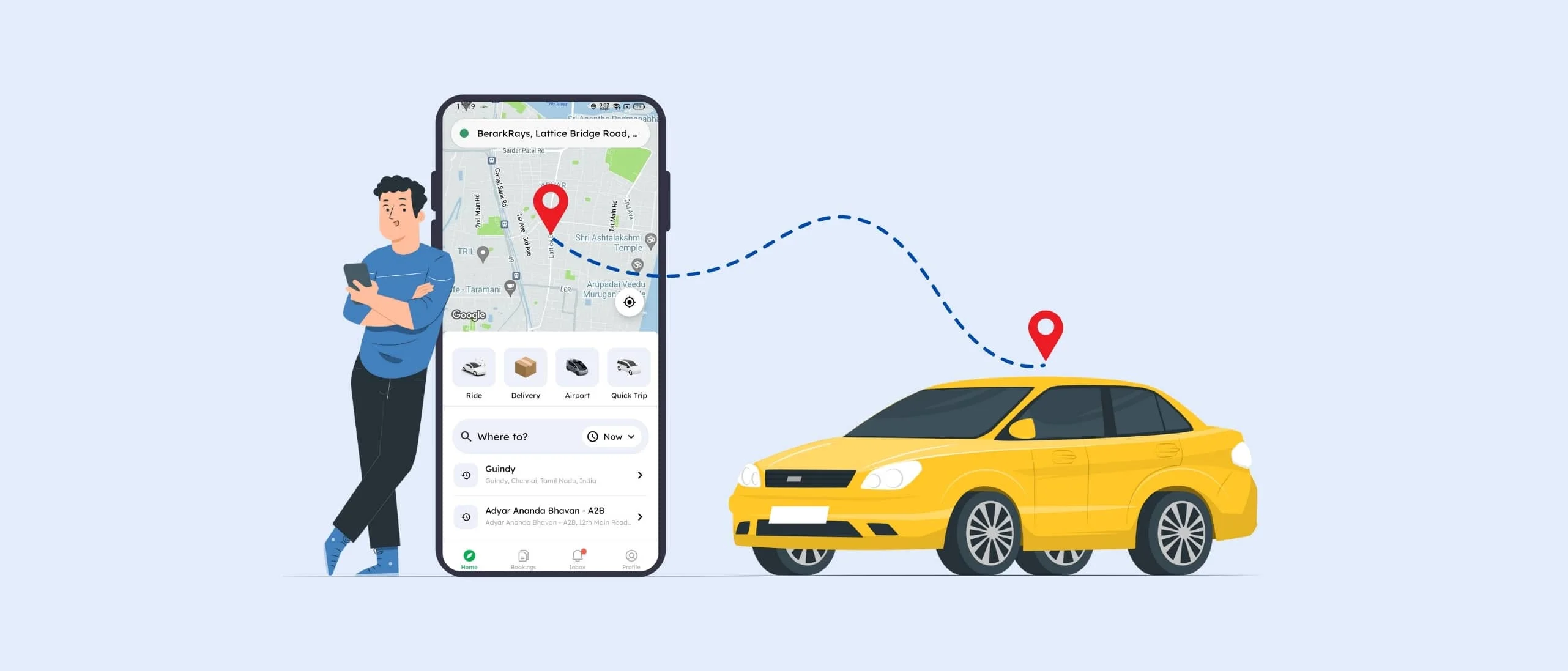
Why Your Taxi Business Needs White Label Dispatch Software
Learn why white label taxi dispatch software is essential for your business. Launch faster, reduce costs, and compete effectively in the ride-hailing market!
John Sibin Raj
Apr 28, 20249 min read
Types of taxi apps used in the USA
Why many taxi businesses in the USA are moving away from aggregators
Taxi apps in USA build from scratch or use ready software
Who should use white label taxi apps in the USA
How to choose the right taxi app software in the USA
Final thoughts
Taxi apps in the USA are no longer a trend. They are now part of how people expect to book rides. Riders want to open an app, choose a pickup point, see the price, and track the car. This habit has become normal across cities, towns, and even smaller regions. For taxi business owners, this change brings both pressure and opportunity.
When people search for taxi apps in USA, they often think about apps like Uber or Lyft. But for taxi business owners, the meaning is very different. Many taxi owners in the USA still rely on phone bookings, WhatsApp messages, or third party apps. These methods work to some extent, but they also limit growth. Missed calls, unclear driver availability, and no real view of daily performance create stress. A proper taxi app solution helps remove this confusion and brings structure to daily operations.
This guide is written for taxi business owners in the USA. It is for owners who run local fleets, airport taxis, medical transport services, and regional ride services. It also helps new entrepreneurs who want to start a taxi business with the right technology from day one. You do not need a technical background to understand this guide. Everything is explained in simple language.
By the end of this article, you will understand what taxi apps in the USA really mean for your business. You will learn the types of taxi apps used today and why many taxi companies move away from aggregators. You will see what features matter most in a taxi app for a taxi business in the USA. You will also learn whether building an app or using ready software makes more sense.
Most importantly, you will learn how to choose a taxi app that gives you ownership. Ownership of your brand, your customers, your pricing, and your future growth. This guide helps you make a smart and informed decision that fits your business goals in 2026 and beyond
Understanding the different types of taxi apps in the USA is the first step to making the right choice for your business. Not all apps are built the same, and each serves a different purpose. Knowing the difference helps you pick the system that fits your fleet, your drivers, and your customers.
Aggregator platforms connect multiple taxi operators and drivers under one app. They work on a commission-based model. Each ride booked through the platform means paying a percentagevof the fare to the platform owner.
The advantage is that you can get more bookings without marketing. But there are trade-offs. You have limited control over pricing and promotions. You cannot directly access the customer database. This lack of control affects brand recognition and long-term business growth.
For taxi companies in the USA that want independence, relying heavily on aggregator platforms can be risky. High commission costs, driver turnover, and little customer loyalty make it hard to build a strong brand over time.
Taxi dispatch software is designed specifically for taxi business owners. It brings the fleet together in one central system. Drivers have their own app. Customers have a booking interface. You get a control panel to manage the fleet, track rides in real time, and handle payments.
Using taxi dispatch software gives your company ownership over operations. You can control pricing, set zones, monitor driver activity, and analyze performance. You also keep customer data, which helps in marketing and loyalty programs.
For taxi owners in the USA, this approach provides long-term stability. It lets you grow without being dependent on outside platforms and keeps your business professional and organized.
White-label taxi apps are ready-made software that can be branded with your company name and logo. They include passenger apps, driver apps, and an admin panel.
The key benefit is branding. You are not just another taxi in a marketplace. You are your own company with a unique app. These apps also scale well. As your fleet grows, you can add more drivers, expand service areas, or integrate features like airport pickups or medical transport services.
For taxi business owners in the USA, white-label solutions combine speed, cost-efficiency, andcontrol. You get a complete system without building it from scratch and can focus on growingyour business instead of managing technical development.
In the early days, aggregator apps helped many taxi businesses survive. They brought quick bookings and exposure to a wider audience. But as the market matured, many taxi owners in the USA started to see the downsides. By 2026, a clear shift is happening. More taxi companies now look for alternatives that give them more control and stability.
Aggregator platforms charge a commission on every ride. At first, this feels manageable. Over time, these fees add up and eat into profits. For many taxi businesses, the commission can reach a level where running the business becomes stressful.
Taxi owners often realize that they work harder but earn less per ride. Rising fuel costs, vehicle maintenance, and driver payouts already put pressure on margins. Adding a high platform fee makes growth difficult, especially for small and mid sized fleets.
Drivers on aggregator platforms often switch between apps. They go where incentives look better for the week. This creates a constant cycle of hiring and training new drivers.
For taxi business owners, this lack of loyalty causes daily challenges. You cannot rely on the same drivers to represent your brand. Service quality becomes uneven, and customer complaints increase. Over time, this hurts trust in your business.
One of the biggest frustrations with aggregator platforms is the lack of control. You cannot fully decide your pricing. Surge rules, discounts, and fare structures are often controlled by the platform.
Customer data also stays with the aggregator. You cannot contact riders directly, offer loyalty programs, or build long term relationships. This makes it hard to grow your business outside the platform.
When customers book through an aggregator app, they remember the platform name, not your taxi company. Your vehicles and drivers become invisible in the brand story.
For taxi businesses in the USA that want to build a local or regional name, this is a major problem. Without brand visibility, you stay dependent on the platform forever. Many taxi owners now see the value in building their own presence and choosing an Uber alternative for taxi companies in the USA.
Taxi business owners often face this question early. Should you build a taxi app from scratch or use ready taxi app software. Both options sound promising, but they lead to very different outcomes in cost, time, and risk.
This section breaks it down in simple terms so you can make a smart choice for 2026 and beyond.
Building a taxi app from scratch in the USA is expensive. You need designers, developers, testers, and project managers. Costs include passenger apps, driver apps, admin panels, maps, payment systems, and security. Even a basic setup can run into high five figures or more.
Ready taxi app software (White-label taxi software) follows a different model. You pay a setup fee and a recurring cost. The price stays predictable. This helps taxi owners plan budgets without surprises. For small and medium fleets, this option often makes more sense.
| Factor | Build from scratch | Ready software |
|---|---|---|
| Initial cost | Very high | Much lower |
| Ongoing cost | Development team needed | Fixed monthly or yearly fee |
| Budget control | Hard to predict | Easy to manage |
Time matters in business. Building a taxi app can take many months even a year. During this time, you cannot launch, test, or earn from the app. Delays are common, especially when changes are needed.
Ready taxi app software is faster. You can launch in weeks, sometimes even days. Branding, settings, and driver onboarding happen quickly. This speed helps taxi businesses enter the market without waiting too long.
Custom built apps need constant care. Updates, bug fixes, and new features require ongoing development. This adds cost and stress.
Ready software providers handle maintenance. Updates roll out automatically. Security patches and performance improvements come as part of the service. Taxi owners can focus on operations instead of technical issues.
Building from scratch carries high risk. If the app fails or does not scale, fixing it costs more money. Many taxi startups struggle at this stage.
Ready taxi app software is tested across multiple fleets. It scales as your business grows. You can add drivers, expand service areas, or launch new services like airport taxis or medical transport without rebuilding the system.
For most taxi businesses in the USA, using ready taxi app software offers a safer and smarter path. It balances control, speed, and cost while reducing risk.
White label taxi apps are not just for large fleets. They work well for many types of taxi and transport businesses across the USA. The key factor is the need for control, branding, and long term growth. If your business fits any of the cases below, a white label taxi app in the USA can be a strong fit.
Local taxi companies often compete with big platforms in their own cities. A white label taxi app helps them protect their customer base. Riders download the company app and book directly instead of using third party platforms.
This builds trust with local customers. Over time, repeat bookings increase because riders remember your brand, not a marketplace app.
Airport taxi services rely on timing, reliability, and clear pricing. White label taxi apps help manage scheduled pickups, flight based bookings, and fixed airport fares.
Drivers get clear instructions, and passengers feel confident knowing their ride is reserved. This level of organization improves service quality and reduces missed pickups.
Non emergency medical transportation providers need structured systems. App based booking helps manage recurring trips, driver assignments, and compliance needs.
White label taxi apps allow NEMT providers to track rides, maintain records, and ensure on time service. This makes operations smoother for both patients and healthcare partners.
New taxi or ride service startups in the USA often want to launch fast. Building an app from scratch slows things down. A white label taxi app lets startups enter the market quickly with a professional setup.
Branding from day one helps create a strong identity. Startups can test the market and scale once demand grows.
Some taxi businesses focus on specific services like women only rides, corporate travel, school transport, or senior rides. White label apps allow custom workflows and pricing for these niches.
This flexibility helps niche services stand out and serve customers better without relying on general marketplace platforms.
Choosing taxi app software is not just a tech decision. It is a business decision that affects daily operations, customer trust, and future growth. The table below helps taxi business owners in the USA quickly compare what really matters before selecting a solution.
| What to check | Why it matters for taxi businesses | What to look for in 2026 |
|---|---|---|
| Compliance with US regulations | Taxi rules differ by state and city. Non compliant software can cause legal trouble | Support for local taxi laws, data protection, and reporting needs |
| Passenger and driver apps included | Separate apps improve experience for both riders and drivers | Native apps for iOS and Android for passengers and drivers |
| Admin and dispatch panel | This is where owners control the business | Real time fleet view, manual and auto dispatch options |
| Pricing and fare control | Profit depends on pricing flexibility | Ability to set base fares, zones, airport rates, and peak pricing |
| Payment support | US customers expect easy payments | Credit cards, debit cards, wallets, and cash support |
| Branding options | Brand visibility builds long term trust | Your logo, colors, app name, and company identity |
| Scalability | Businesses grow over time | Easy driver addition, city expansion, and new service setup |
| Customer data ownership | Customer relationships drive repeat business | Full access to rider data and booking history |
| Reporting and analytics | Data helps improve decisions | Ride reports, revenue reports, driver performance insights |
| Support and onboarding | Smooth launch reduces stress | Guided onboarding, training help, and responsive support |
| Cost transparency | Hidden fees cause problems later | Clear setup fees and predictable monthly pricing |
Final Thoughts
Running a taxi business in the USA today takes more than good drivers and clean vehicles. It takes systems that support your work instead of slowing it down. A taxi app, when chosen well, becomes that support system. It brings clarity to daily operations and confidence to long term planning.
The right app helps you stay organized as bookings grow. It helps drivers stay focused on rides instead of instructions. It helps customers trust your service because everything feels simple and professional. These small improvements add up and shape how your business is seen in the market.
What matters most is not having the latest technology. What matters is having control. Control over how your business runs, how customers interact with you, and how your brand grows over time. When the technology works quietly in the background, you get more time to focus on service and growth.
Every taxi business is different. Some are expanding fleets. Some focus on a specific service area or customer group. A flexible taxi app gives you room to move at your own pace without forcing you into a fixed model.
If you are thinking about the next step for your taxi business, start by seeing how modern taxi apps actually work in practice. A simple demo can answer many questions and help you decide with clarity, not pressure.
A calm, informed decision today can make your business easier to run tomorrow and stronger in the years ahead.

Types of taxi apps used in the USA
Why many taxi businesses in the USA are moving away from aggregators
Taxi apps in USA build from scratch or use ready software
Who should use white label taxi apps in the USA
How to choose the right taxi app software in the USA
Final thoughts
Blog

Learn why white label taxi dispatch software is essential for your business. Launch faster, reduce costs, and compete effectively in the ride-hailing market!
John Sibin Raj
Apr 28, 2024
A taxi dispatch system serves as the backbone of any modern taxi business, managing the entire lifecycle of a ride from booking to payment.
John Sibin Raj
June 27, 2024
South Korea is a country that never slows down. Offices often run late into the evening, the streets stay busy, and life moves at a quick pace. In this kind of pace, waiting on the curb to hail a ride feels slow.
Ebenezer Jose
Sep 16, 2025